Site Shaping Before Final Surface Work
Rough Grading in Osceola for properties requiring earth movement before construction or landscaping begins
Bradway Land Management handles rough grading for building sites, access areas, and land improvement projects where the existing terrain needs to be reshaped before finish work can begin. This service addresses sites with uneven elevations, drainage concerns, or areas where vegetation has been cleared and the ground requires initial leveling. The work creates a stable base that supports the next phase of development, whether that involves construction, road installation, or landscape preparation.
Rough grading involves moving earth to establish proper slopes, eliminate high spots, fill low areas, and direct water away from structures or access points. The process uses excavation equipment to cut and fill soil according to the intended use of the land, with grades set to prevent pooling and erosion while accommodating future drainage systems or surface treatments.
Schedule a site evaluation to review grading requirements based on your property's current condition and planned improvements.
What Happens During the Grading Phase
Rough grading begins after land clearing or excavation work has removed vegetation, stumps, and debris from the area being shaped. Equipment operators move soil to match elevation targets, adjust slopes to direct runoff, and compact fill areas to prevent settling. The work prioritizes functional drainage patterns and access routes rather than final surface smoothness, since additional grading or landscaping typically follows.
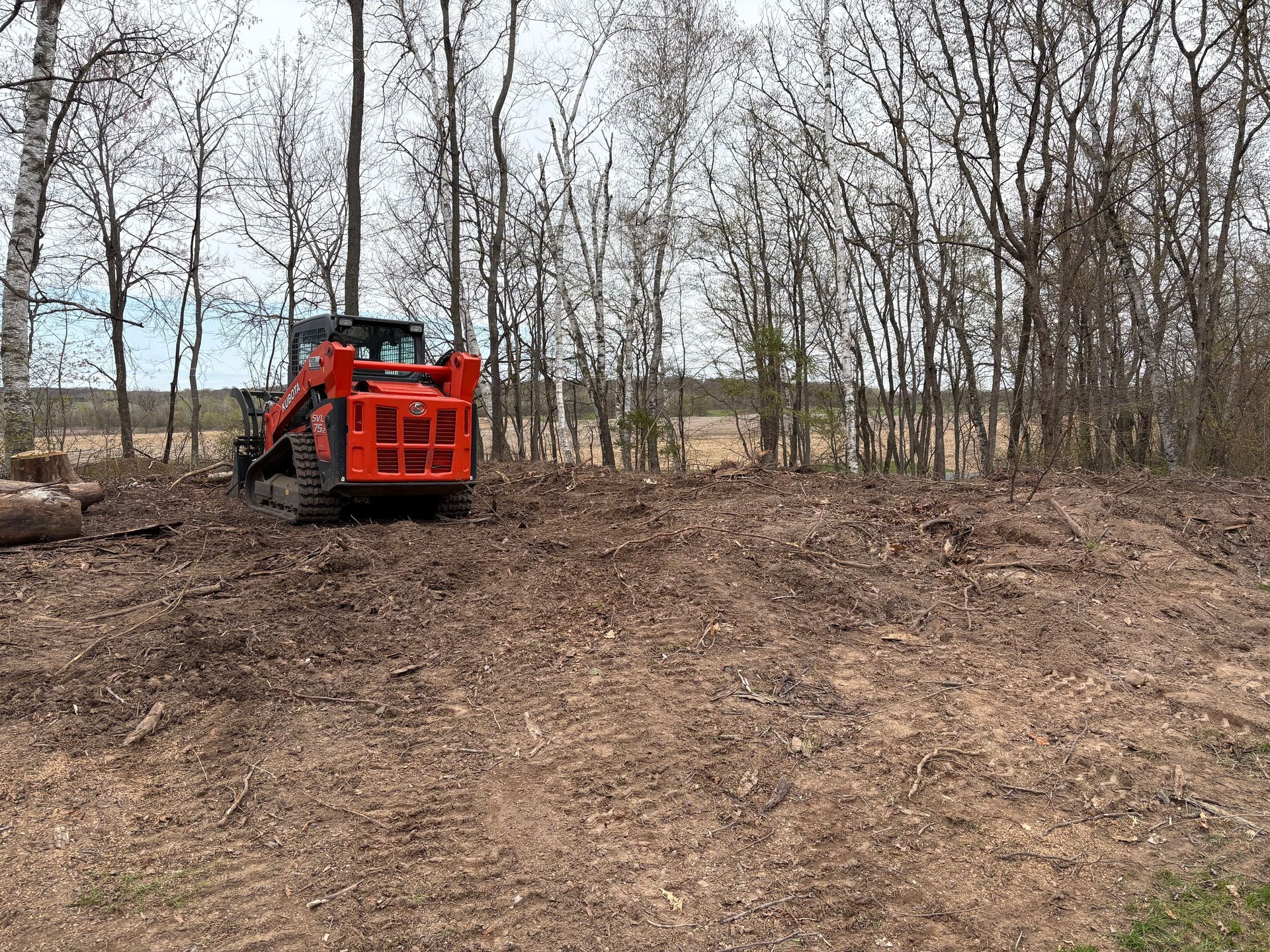
Once the rough grade is complete, you'll notice that water no longer pools in low spots during rain events, access routes are passable without crossing washouts or soft soil, and the site has a uniform appearance that supports the next construction or landscaping phase. The surface will show equipment marks and may include some loose soil, but the underlying shape and slope will be established according to the project's requirements.
Rough grading does not include topsoil placement, seeding, or finish grading for landscaping. It prepares the site's foundational shape and drainage flow, leaving surface treatment and vegetation work for later stages when the project is ready for final site improvements.
Questions Landowners Ask About Site Grading
Property owners in Osceola and neighboring communities often have questions about rough grading before starting their land improvement projects.
What condition does the site need to be in before rough grading starts?
The area should be cleared of trees, brush, stumps, and large debris so equipment can access the soil and shape it without obstruction.
How does rough grading differ from finish grading?
Rough grading establishes the overall shape, slope, and drainage direction of the land, while finish grading smooths the surface and prepares it for landscaping, seeding, or paving.
When should rough grading be scheduled during a project?
It typically happens after land clearing and excavation work but before building construction, driveway installation, or any activity that requires a stable, properly sloped surface.
What factors affect the grading approach?
Soil type, existing elevation changes, planned drainage paths, and the location of future structures or access points all influence how the earth is moved and shaped.
Can rough grading address drainage problems on its own?
It redirects surface runoff and eliminates low spots, but properties with significant water flow may also require culvert installation or additional drainage features to manage movement through the site.
Bradway Land Management evaluates site conditions and project plans to determine the grading work needed before construction or landscaping begins. Request an on-site consultation to discuss elevation changes, drainage patterns, and the grading scope for your property in Osceola.