Unwanted Growth Removed for Property Access
Land Clearing in Osceola for construction sites, overgrown acreage, or properties needing vegetation removed for access and usability
Dense brush, volunteer trees, and years of unchecked saplings turn property into obstacles rather than assets, blocking construction access and hiding usable land under layers of woody growth. Land clearing removes unwanted vegetation so property can be used for building, recreation, improved maintenance, or simply accessed without fighting through underbrush. Bradway Land Management evaluates sites around Osceola, Amery, Spooner, and surrounding areas to determine which vegetation gets removed, what equipment matches the density and terrain, and whether clearing should pair with grading or mulching to prepare the land for its intended purpose.
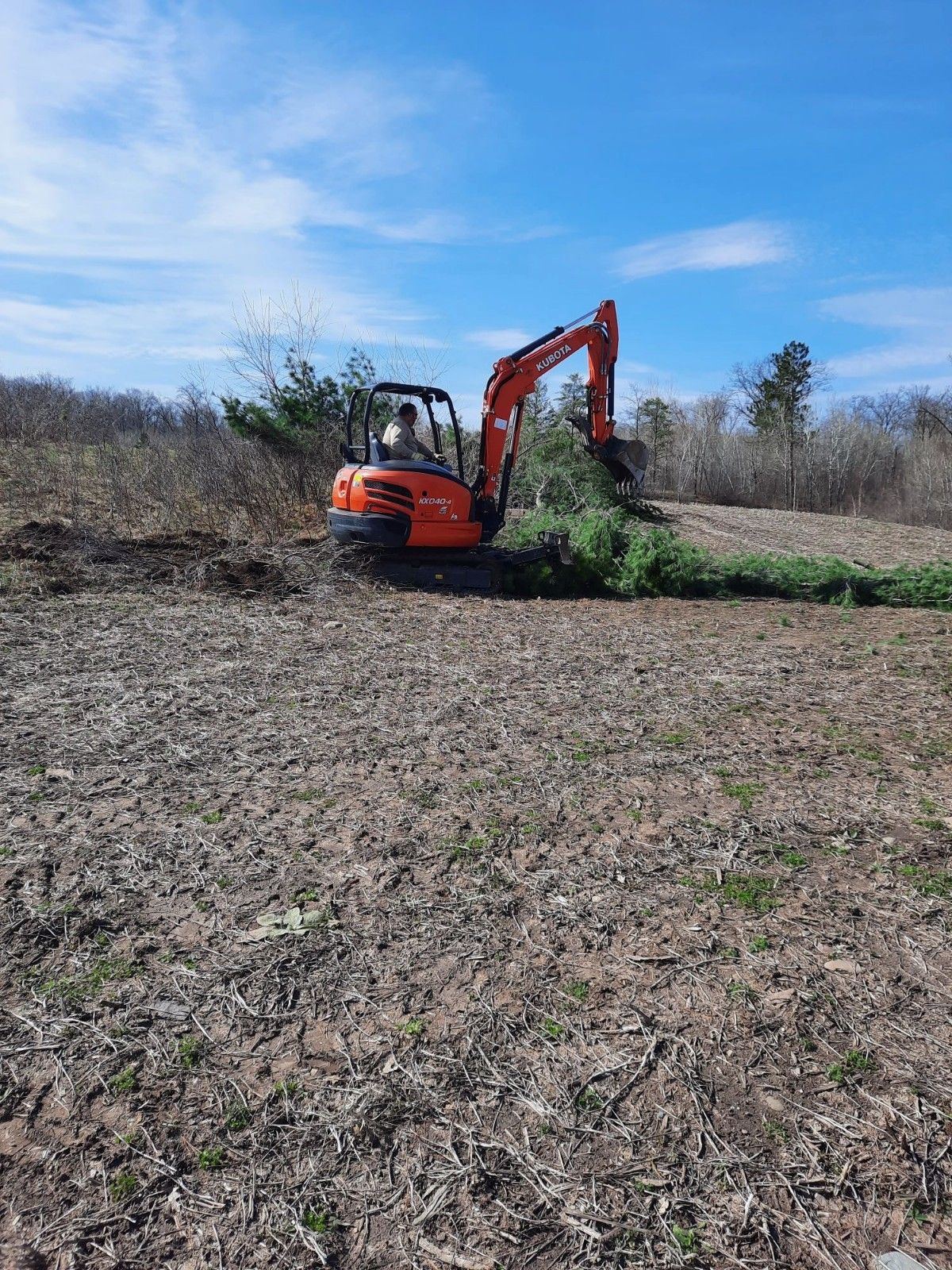
Clearing begins with site evaluation—identifying property lines, locating utilities, marking trees or features to preserve, and determining how the removed material will be processed. The work removes saplings, brush, and unwanted trees either through forestry mulching that grinds material on site or conventional clearing that removes stumps and roots when the land needs to be graded afterward. Large trees beyond mulching capacity get felled and processed separately, with stumps removed if the site plan requires it.
Arrange an on-site consultation to review which sections require clearing and how the work integrates with your property plans.
What You Notice Once Vegetation Removal Is Finished
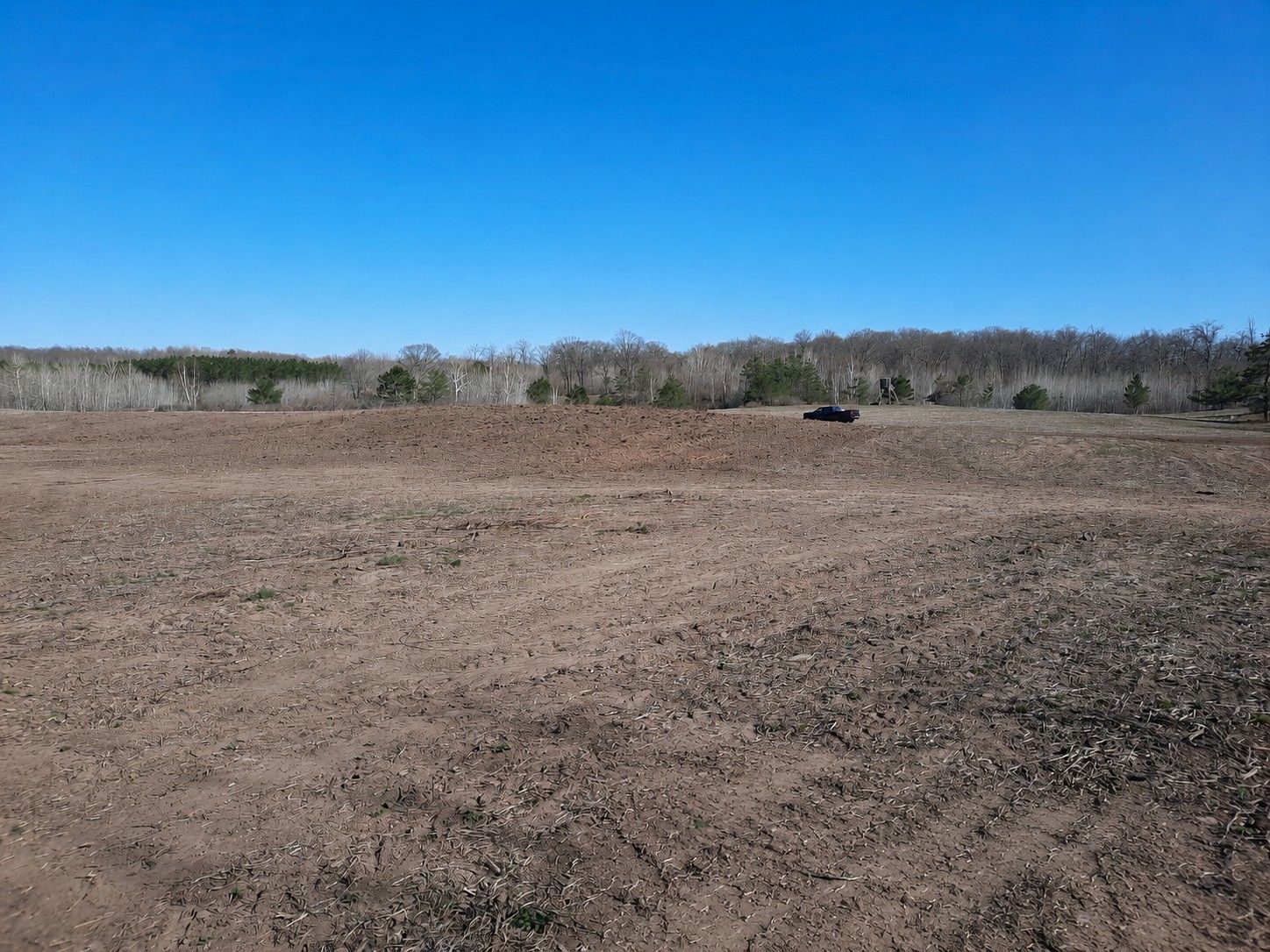
After clearing, property lines become visible again, and you can walk the boundaries without cutting a path. Construction sites show defined footprints where equipment can access and stage without delay, and recreational land opens into spaces where you can move freely rather than navigating around thickets. The difference is functional—what was impassable becomes usable, and what required constant maintenance becomes manageable with periodic attention.
Clearing also reveals ground conditions that were hidden under vegetation: drainage patterns, slope variations, and soil composition all become visible once the canopy and underbrush are removed. This visibility allows better planning for the next steps, whether that involves building, grading, landscaping, or simply maintaining the cleared area to prevent regrowth. Properties cleared with forestry mulching show a layer of shredded organic material that decomposes over time, while sites cleared for grading or construction show bare ground ready for earthwork.
The approach adapts to what the property needs next—some sites require only vegetation removal and can retain existing grades, while others benefit from pairing clearing with rough grading to address drainage or create level areas. Sites with seasonal water flow may need selective clearing patterns that preserve certain vegetation for erosion control, and properties near wetlands require careful equipment operation to avoid soil compaction in sensitive areas.
Common Questions About This Service
Land clearing work in Osceola or a neighboring community addresses everything from small residential lots to multi-acre parcels, and the approach changes based on vegetation type, soil conditions, and what the cleared land will be used for.
What types of vegetation can be removed through land clearing?
Clearing handles brush, saplings, volunteer trees, invasive species, and undergrowth up to the capacity of the equipment being used, with larger trees requiring conventional felling and removal rather than mulching.
How does clearing affect the soil underneath?
Equipment weight and ground conditions determine soil impact—frozen or dry ground supports heavy machinery with minimal disturbance, while wet soil can compact or rut, which is why timing and equipment selection matter.
What gets left behind after clearing is complete?
Forestry mulching leaves shredded organic material distributed across the site, while conventional clearing removes vegetation entirely, and stump grinding eliminates root structures if the site requires grading or building afterward.
When should clearing be scheduled relative to construction or other site work in Osceola?
Clearing typically happens far enough ahead of construction to allow soil stabilization but close enough that aggressive regrowth doesn't reclaim the site, usually within a few weeks to a few months depending on the season.
How do property boundaries get identified before clearing starts?
Surveyed property pins, visible fence lines, or county GIS data establish boundaries, and clearing stops short of disputed or unclear lines unless the property owner provides documented confirmation.
Bradway Land Management evaluates properties throughout Osceola to determine the clearing method and equipment that match your site conditions and project goals. Call (715) 417-4816 to schedule a property assessment and discuss clearing options.