Brush Processed Without Piles or Hauling
Forestry Mulching in Osceola for overgrown acreage, dense saplings, or wooded areas needing vegetation management without debris removal
Overgrown properties generate mountains of brush, saplings, and woody debris when cleared conventionally, requiring burn piles, hauling, or weeks of cleanup that costs as much as the clearing itself. Forestry mulching grinds unwanted vegetation directly on site using a drum equipped with cutting teeth, processing brush and small trees into shredded organic material that spreads across the ground and decomposes naturally. Bradway Land Management operates forestry mulching equipment throughout Osceola, Grantsburg, Cumberland, and surrounding areas, addressing overgrown wooded areas, reclaiming fields overtaken by saplings, and clearing trails or access routes without leaving debris piles that need disposal.
Mulching works best for brush, saplings, and trees up to six inches in diameter—material dense enough to block access but small enough to be processed by the mulching head. The machine grinds vegetation in a single pass, leaving a layer of shredded wood and bark that settles into the soil, reduces erosion, and suppresses some regrowth by blocking sunlight from reaching seeds in the ground. The process doesn't remove stumps or roots, so it's not appropriate for sites that need grading afterward, but it opens wooded property quickly without the logistical complications of debris removal.
Arrange a property evaluation to determine if your vegetation density and size range match forestry mulching capabilities.
What Changes After Mulching Is Finished
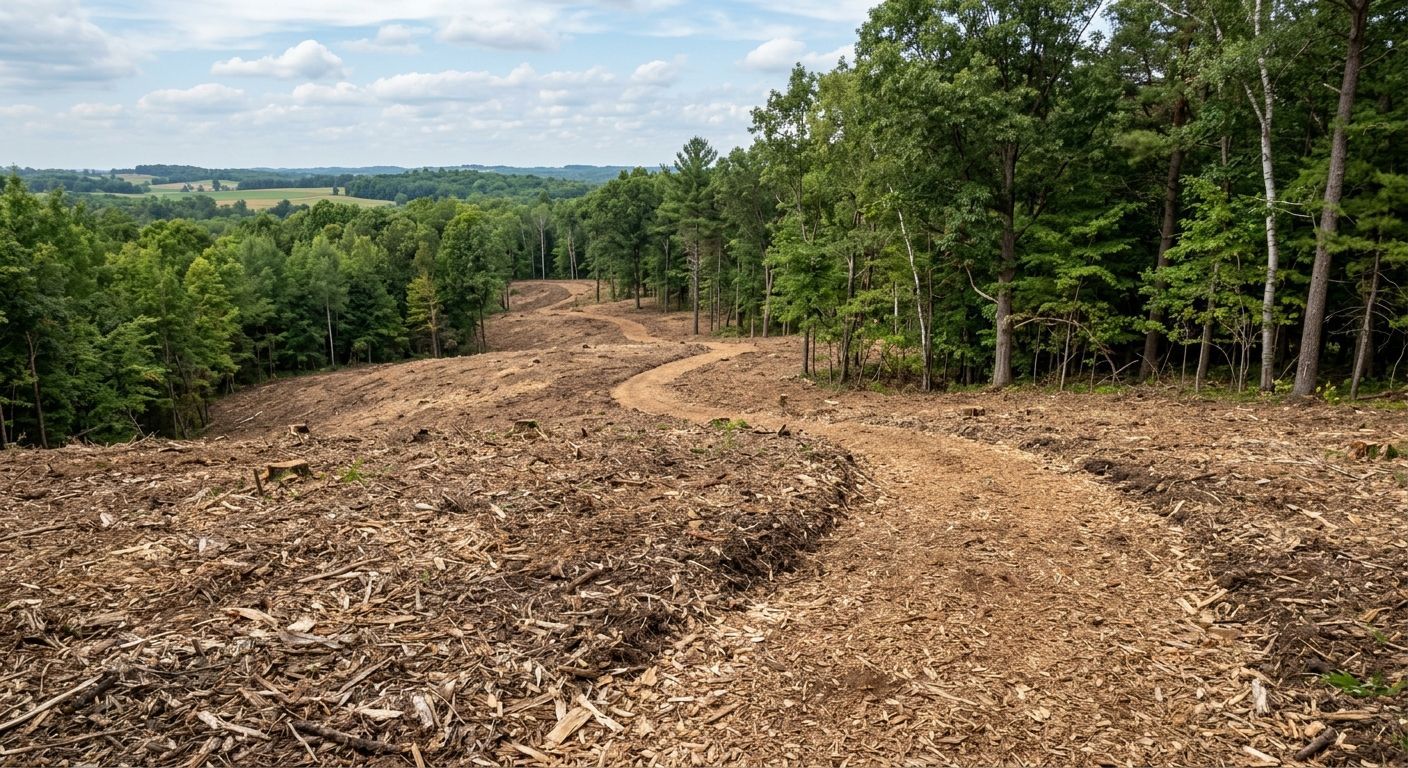
Forestry mulching processes vegetation at ground level, leaving stumps and root systems intact but removing the above-ground mass that blocked visibility and access. After mulching, previously impassable wooded areas open into spaces where you can walk, drive ATVs, or establish trails without constantly cutting back growth. The mulched material creates a layer several inches deep that covers the ground, giving the property a processed appearance distinct from both dense brush and bare soil.
The mulch layer decomposes over months to years depending on material type and local moisture, gradually integrating into the soil and adding organic matter. During decomposition, the mulch suppresses some weed and sapling regrowth by blocking light, though it doesn't eliminate regrowth entirely—properties still require periodic maintenance to prevent aggressive species from reclaiming cleared areas. Wooded acreage that was tangled and impenetrable becomes accessible, and sight lines open enough to see property boundaries, identify features, and move through the land without fighting vegetation at every step.
Mulching applications include reclaiming overgrown fields, opening understory in wooded areas to improve wildlife habitat, clearing trails and access routes, managing invasive species, and preparing recreational land for hunting or hiking. The process doesn't create level ground or remove obstacles like rocks and stumps, so sites requiring construction or grading need conventional clearing instead.
Questions Before Starting Your Project
Forestry mulching handles specific vegetation management needs around Osceola and neighboring communities, and understanding what the process does—and doesn't do—helps property owners determine if it matches their land goals.
What size trees can forestry mulching handle?
Most mulching equipment processes material up to six inches in diameter efficiently, with some machines handling slightly larger growth, but trees beyond that range require conventional felling and removal.
How does the mulched material affect the property long-term?
The shredded organic matter decomposes over time, adding nutrients to the soil and reducing erosion, though it doesn't eliminate regrowth and properties may need periodic re-mulching to maintain open conditions.
Why choose mulching instead of conventional clearing and burning?
Mulching eliminates debris disposal costs and time, completes in fewer passes, avoids smoke and fire permits, and leaves an erosion-resistant surface layer instead of bare ground vulnerable to runoff.
What types of vegetation does mulching work best for in Osceola?
Mulching handles brush, saplings, briars, invasive shrubs, and volunteer trees common in Wisconsin woodlands, but it struggles with large hardwoods, stumps, or areas requiring complete root removal for grading.
How often does mulched property need re-clearing?
Regrowth timing depends on species present, soil conditions, and seed sources nearby, but most mulched properties see noticeable regrowth within two to five years and benefit from maintenance mulching to stay open.
Bradway Land Management evaluates wooded and overgrown properties throughout Osceola to identify sections suited for forestry mulching and vegetation management. Call (715) 417-4816 to discuss your acreage and clearing objectives.