Managing Water Movement Across Your Property
Drainage Control in Osceola for sites with unwanted runoff, standing water, or erosion caused by unmanaged water flow
Wisconsin's seasonal rain patterns and spring snowmelt can overwhelm properties where natural drainage paths have been altered by development, grading, or vegetation removal. Standing water appears in low areas, runoff carves channels through driveways or yards, and saturated soil makes access routes impassable during wet periods. Bradway Land Management addresses these issues by reshaping terrain, installing drainage features, and directing water along controlled paths that prevent pooling and erosion while maintaining usable land.
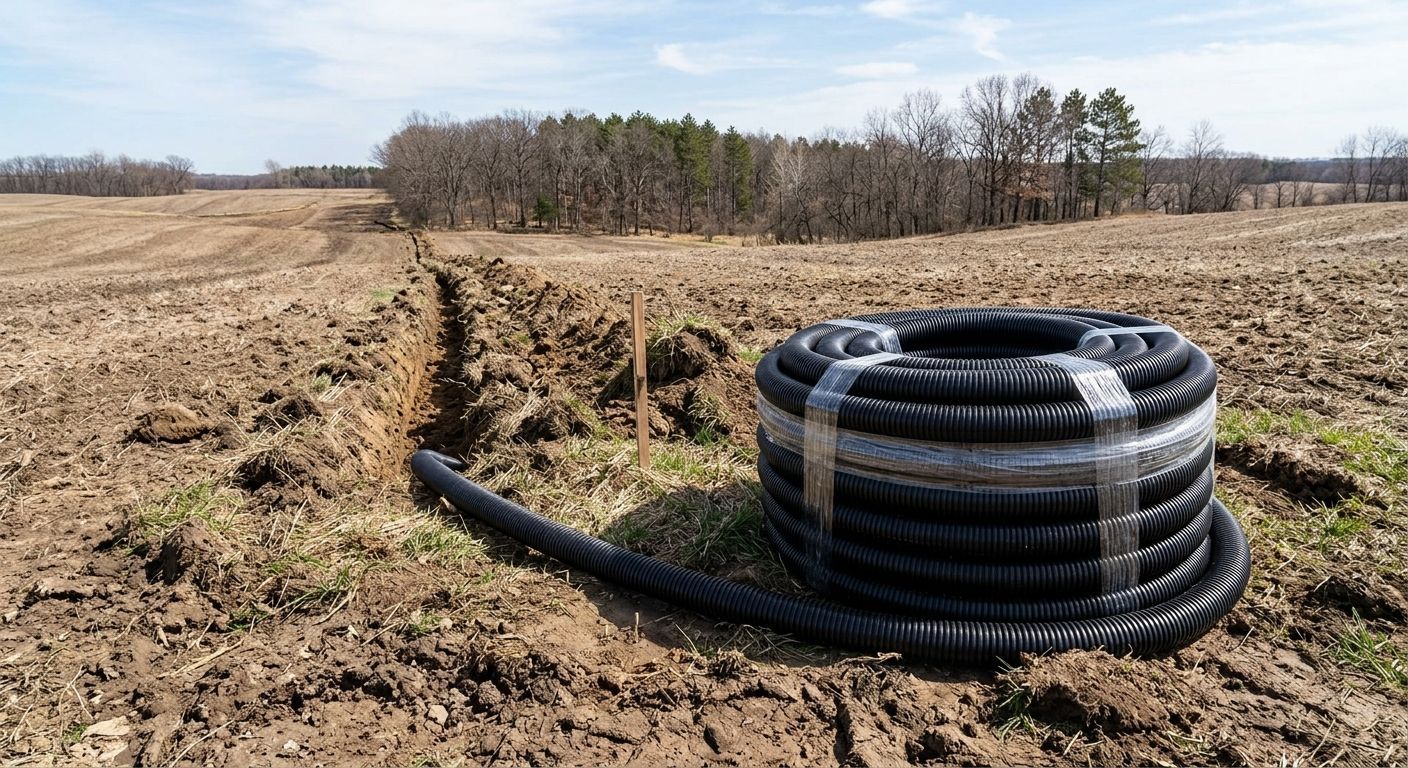
Drainage control combines grading to eliminate depressions, excavation to create channels or swales that guide runoff, and culvert placement where water needs to pass beneath roads or through berms. The approach depends on where water enters the property, how much volume arrives during storm events, and where it can be safely directed without causing downstream problems or concentrating flow in vulnerable areas.
Request a property evaluation to identify drainage problems and review options for redirecting or managing water based on your site's topography.
The Difference Between Grading and Drainage Features
Grading changes the slope of the land to move water away from structures, access routes, or areas where pooling interferes with use. Excavated swales or ditches provide a defined path for larger runoff volumes, while culverts allow water to cross under driveways or other obstacles without interrupting flow. The combination of these techniques is selected based on how much water needs to move, how far it must travel, and what natural outlet exists downslope from the problem area.
Once drainage work is complete, water will follow the new paths created by grading and excavation rather than pooling or eroding uncontrolled areas. You'll notice that access routes remain passable during rain, saturated zones dry out faster between storms, and erosion no longer undercuts driveways or exposes foundations.
Drainage control does not prevent all water from entering the property or eliminate natural wetlands, and it may require coordination with neighboring landowners if runoff crosses property lines. The work redirects and manages flow within the site's physical constraints and legal boundaries.
Questions Before Starting Your Project
Property owners in Osceola and surrounding areas dealing with water problems often need clarity about what drainage work involves and what results to expect.
What causes standing water to appear in the same spot repeatedly?
Low areas collect runoff because surrounding grades direct water toward them, and the soil cannot absorb or drain the volume quickly enough, requiring either fill to raise the area or excavation to create an outlet.
How is the drainage plan determined for a property?
The plan is based on observing where water enters, where it pools, what slopes exist, and where it can be directed to exit the property without causing erosion or transferring the problem elsewhere.
Can drainage work be done in phases?
Yes, critical areas such as driveway washouts or foundation threats can be addressed first, with additional grading or swale installation completed later as budget and site conditions allow.
What maintenance does a drainage system require after installation?
Culverts may need periodic debris removal, and swales should be inspected for sediment buildup or erosion that reduces their capacity to carry water during heavy rain.
How does soil type in this region affect drainage solutions?
Clay-rich soils common in western Wisconsin drain slowly, so drainage features must be sized to temporarily hold runoff while it gradually infiltrates or moves downslope rather than expecting rapid absorption.
Bradway Land Management evaluates site-specific drainage challenges and recommends grading, excavation, or culvert solutions based on your property's terrain and water flow patterns. Call (715) 417-4816 to discuss drainage control options and schedule a site visit in Osceola.