Earthwork for New Pond Projects
Pond Digging in Osceola for landowners planning excavation and site preparation for a new pond
A new pond requires excavation that accounts for soil type, water source, surrounding terrain, and access for equipment. Bradway Land Management provides pond digging services for properties where site conditions support excavation and where landowners have planned for a pond as part of their land use strategy. The work involves removing earth to create the pond basin, shaping banks, and establishing grades that allow water to collect and remain within the excavated area.
Pond excavation involves cutting into the existing grade, stockpiling or redistributing soil, and forming a basin with sloped sides that prevent erosion and allow safe access to the water's edge. Site characteristics such as groundwater levels, soil composition, and drainage patterns all affect how the pond is shaped and how the surrounding land is graded to direct runoff or maintain water levels.
Arrange an on-site consultation to evaluate soil conditions, water sources, and excavation requirements for your planned pond location.
Why Site Conditions Determine Excavation Approach
Soil composition directly affects excavation difficulty and the pond's ability to hold water. Clay-rich soils typically retain water better than sandy or gravelly soils, while rocky substrates may require additional equipment or alternative placement. The depth and shape of the pond basin are planned based on the property's topography, intended use, and available water sources, whether from groundwater seepage, surface runoff, or stream diversion.
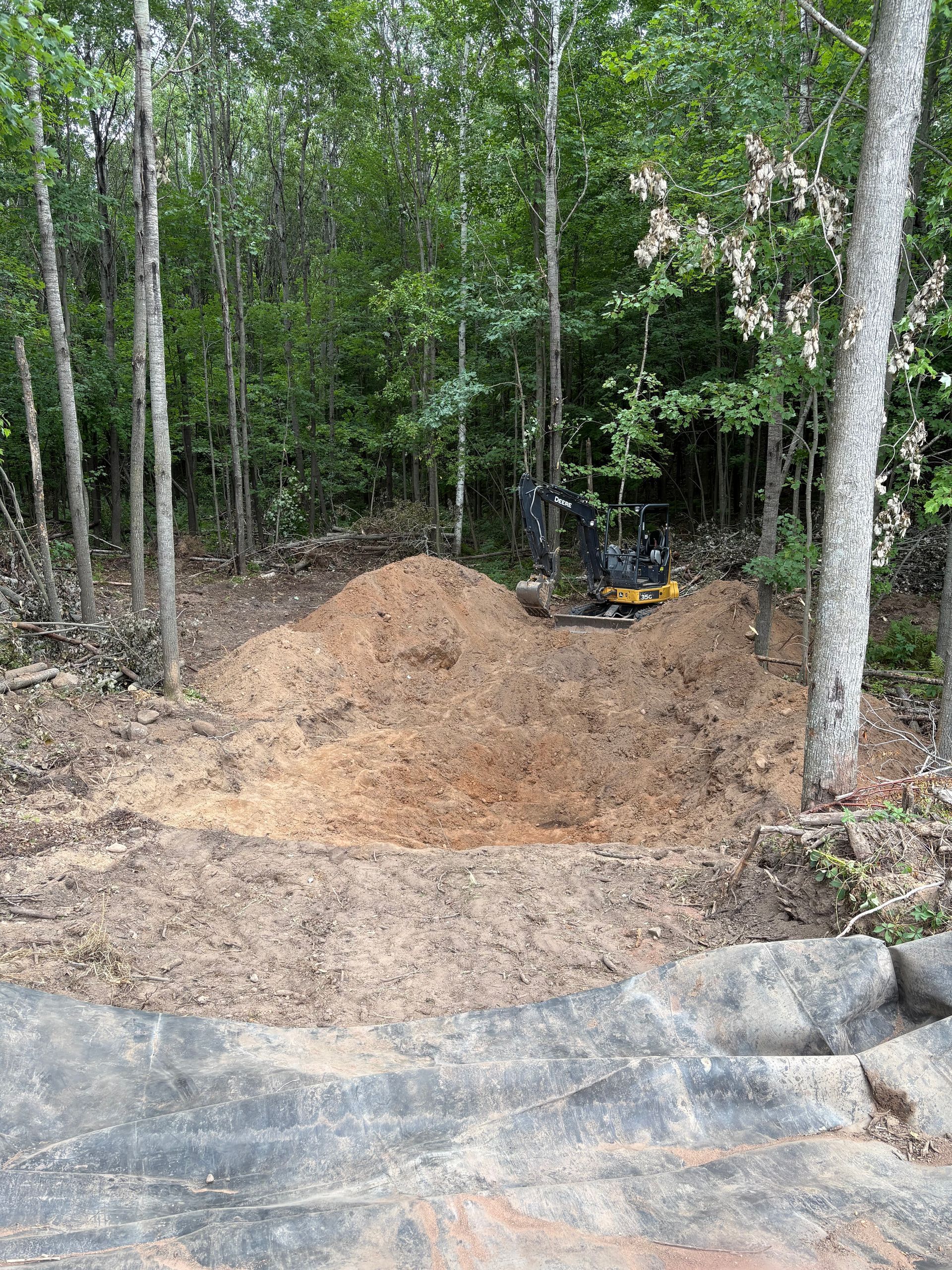
After excavation is complete, the site will show a defined basin with sloped banks, stockpiled soil that can be used for grading or berm construction, and access routes for equipment removal. The pond's outline and depth will match the planned design, though water accumulation and retention depend on ongoing site conditions that cannot be guaranteed without monitoring over time.
Pond digging does not include liner installation, permitting assistance, or long-term water retention guarantees. The service focuses on earth removal and basin shaping, with final pond performance depending on groundwater presence, rainfall patterns, and soil characteristics observed after excavation.
Common Questions About This Service
Landowners considering a pond project in Osceola, Hudson, River Falls, and surrounding areas often want to know what the excavation process involves and what site factors matter most.
What site evaluation happens before digging begins?
The consultation assesses soil type, existing drainage, topography, water sources, and access for excavation equipment to determine if the location supports a pond and what excavation approach is needed.
How is the pond's depth and shape determined?
Depth and shape are planned based on intended use, soil conditions, available space, and how water is expected to enter and remain in the basin, with deeper areas typically placed where groundwater levels are highest.
What happens to the soil removed during excavation?
Excavated soil is stockpiled on-site and can be used for berms, grading around the pond, or distributed elsewhere on the property depending on the landowner's plans.
When is the best time to schedule pond excavation in this region?
Dry periods allow easier equipment access and soil handling, while wet conditions can make excavation more difficult and affect how the pond basin holds its shape during digging.
Can a pond be dug without knowing if it will hold water long-term?
Excavation can proceed based on favorable site indicators, but water retention depends on groundwater levels and soil permeability that are only fully confirmed after the pond has time to fill and stabilize.
Bradway Land Management evaluates site-specific conditions before recommending pond excavation and discusses realistic expectations based on soil type and water availability. Contact our team at (715) 417-4816 to schedule a property assessment and review your pond project plans.