Acreage That Stays Workable and Accessible
Farm Land Management in Osceola for properties with overgrown edges, uneven drainage, and restricted field access
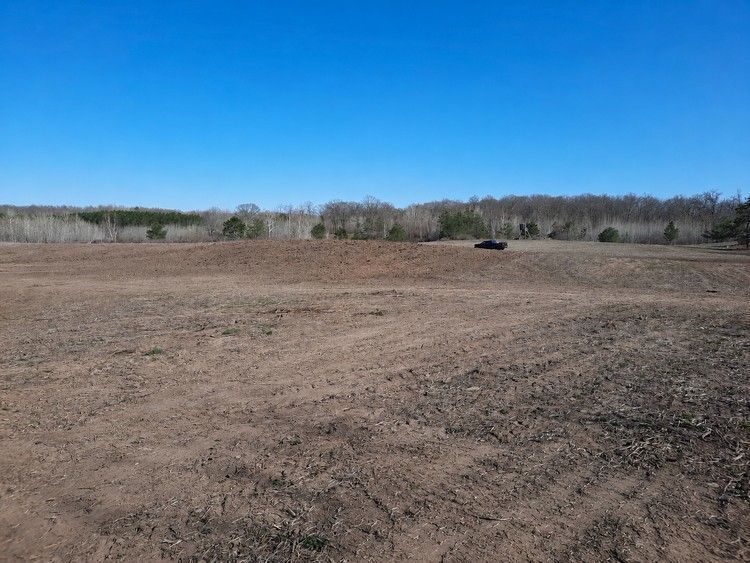
Field edges overtaken by brush, low spots that hold water after every rain, and access routes choked with vegetation reduce how much of your acreage you can actually use. Bradway Land Management addresses these functional problems through brush removal, heavy-duty mowing, land clearing, grading, and drainage control that restore agricultural land to working condition. The service targets problem vegetation, uneven ground, and compromised access so you can use the full extent of your property without fighting through overgrowth or navigating rutted paths every time equipment needs to move.
Farm land management involves clearing vegetation that encroaches on field boundaries, leveling ground that holds water or creates equipment hazards, cutting drainage channels that move runoff away from productive areas, and establishing access routes that equipment can travel year-round. Each intervention addresses a specific functional limitation—whether that's brush blocking fence lines, uneven terrain that damages equipment, or drainage patterns that leave fields waterlogged for days after rainfall.
Schedule a property evaluation to identify specific clearing, grading, or drainage improvements needed across your acreage.
What Proper Land Management Requires
Heavy-duty mowing handles thick vegetation that standard equipment can't cut, while forestry mulching or mechanical clearing removes woody growth from field edges and fence lines without leaving debris piles that need hauling. Grading equipment levels uneven ground and reshapes drainage patterns so water moves off fields instead of pooling in low areas, and new access routes get cut through overgrowth so equipment can reach sections of the property that have become inaccessible over time.
After clearing and grading work finishes, you'll notice field boundaries that are defined and accessible again, ground that drains properly after heavy rain instead of holding standing water, and access routes that equipment can travel without getting stuck or damaged by ruts. Vegetation no longer creeps into productive areas each season, and the entire acreage becomes manageable with standard maintenance equipment rather than requiring constant battle against encroaching brush.
The scope of work depends on current conditions—properties with years of deferred maintenance require more intensive clearing and grading than land that's been maintained regularly. Some projects focus entirely on vegetation removal, while others emphasize drainage correction or access improvements. The goal is functional acreage that supports agricultural use without ongoing struggle against problem vegetation or drainage failures.
What Property Owners Usually Ask
Questions about farm land management often focus on what the work involves and what changes afterward.
What happens to cleared brush and vegetation after removal?
Material gets mulched in place or cleared entirely depending on volume and your preference—mulched material breaks down over time and adds organic matter to soil, while complete removal leaves clean ground ready for immediate use.
How does grading correct drainage problems on agricultural land?
Equipment reshapes ground to eliminate low spots where water collects, creates slight slopes that move runoff toward designated drainage areas, and cuts channels that carry water off fields during heavy rainfall without eroding soil.
When should farm land management be scheduled to avoid disrupting growing seasons?
Work typically happens during dormant periods or after harvest when fields aren't in active production, though emergency access improvements or drainage corrections may be needed regardless of season if problems threaten equipment or limit field use.
What determines whether heavy-duty mowing or mechanical clearing is used?
Vegetation type and density dictate the approach—mowing handles thick grass, weeds, and light brush up to several inches in diameter, while mechanical clearing removes woody growth, saplings, and established brush that's too large or dense for mowing equipment.
How long do clearing and grading improvements last before maintenance is needed again?
Properly cleared field edges and graded drainage patterns remain functional for years with minimal upkeep, though some level of vegetation control is needed annually to prevent brush from re-establishing in cleared areas.
Bradway Land Management works with agricultural property owners to restore functionality to overgrown or poorly draining acreage. Request a site visit to review specific vegetation, drainage, or access issues affecting your farm land.