Driveways That Handle Daily Use Again
Driveway Grading in Osceola for gravel and unpaved surfaces affected by ruts, uneven areas, and poor driving conditions
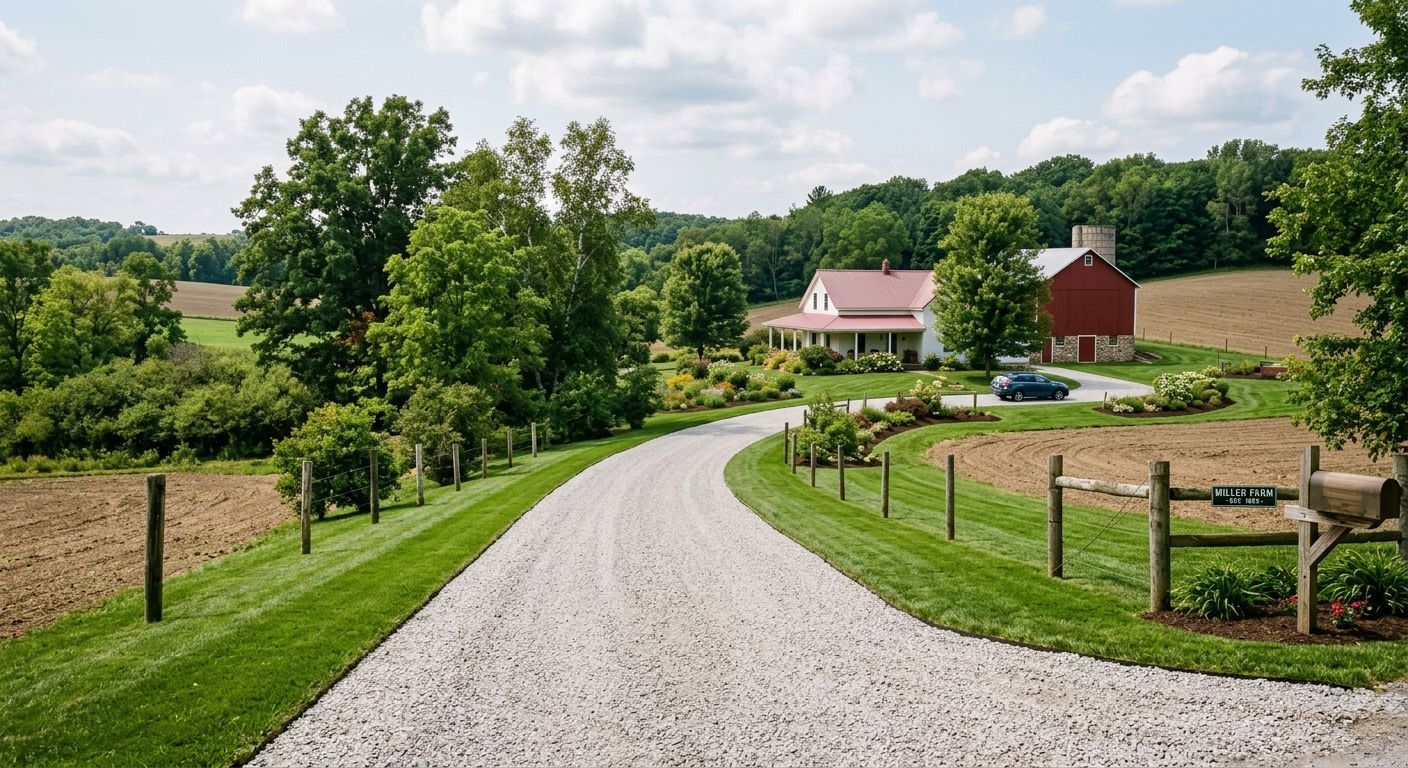
Gravel driveways develop ruts where tires track repeatedly, high centers where material piles up between wheel paths, and washouts where water cuts channels across the surface. Bradway Land Management reshapes dravel and unpaved driveways by redistributing material, correcting the crown, and restoring a smoother driving surface that handles vehicle traffic without constant patching. Properties around Osceola, Turtle Lake, New Richmond, and surrounding areas with long driveways or driveways that cross slopes lose surface integrity after seasons of freeze-thaw cycles and runoff, and grading addresses the functional problems that make driving difficult and accelerate further damage.
Grading involves pulling material from high spots and filling ruts, reestablishing a crowned profile so water drains off the sides instead of pooling or channeling, and compacting the reshaped surface so it remains stable under load. If drainage problems contribute to driveway failure—such as missing or undersized culverts—those issues need separate attention beyond surface grading, and the company's drainage and culvert services handle those concerns.
Schedule a property evaluation to identify surface issues and whether underlying drainage work is required before grading restores function.
How Grading Addresses Poor Surface Conditions
Grading reshapes the driveway profile so that rainwater and snowmelt move off the surface instead of cutting into it. The process corrects slopes that direct water down the center, eliminates depressions where puddles form, and creates a consistent driving path without jarring transitions or scraping. Equipment used for grading spreads and levels material across the driveway width, removing the uneven texture caused by repeated vehicle passes and erosion.
After grading, you notice that vehicles track smoothly without dipping into ruts, water runs off the edges during rain rather than pooling in the wheel paths, and the driveway surface feels firm instead of loose or shifting. The reshaped profile lasts longer because drainage is improved, reducing the rate at which new ruts and washouts develop. Properties with properly crowned driveways require less frequent regrading and fewer loads of replacement gravel over time.
Grading does not add material to driveways that have lost significant stone, nor does it address base failure where the subgrade has become saturated and unstable. If the driveway has lost most of its gravel layer or if soft spots indicate deeper problems, additional material and base work may be necessary before grading produces lasting results. Surface grading works best when the existing material is sufficient but poorly distributed.
What Property Owners Usually Ask
Driveway maintenance questions focus on how grading improves driving conditions, how long the work lasts, and what other factors affect whether a driveway stays functional between maintenance cycles.
What causes gravel driveways to develop ruts and uneven surfaces over time?
Vehicle tires push material outward and downward where weight concentrates, creating ruts in the wheel paths and ridges between them. Rain and snowmelt accelerate the process by washing loose stone into low spots and undercutting the surface where water flows across rather than off the driveway.
How does grading differ from simply adding more gravel to problem areas?
Grading redistributes existing material and reshapes the profile to improve drainage, while adding gravel only raises the surface temporarily without correcting the slopes and contours that caused the problem. Driveways that are repeatedly topped off with stone but never graded often become excessively crowned or develop irregular surfaces that are difficult to drive on.
When should driveway grading be scheduled to maintain surface quality?
Grading in spring after freeze-thaw damage becomes visible or in fall before winter allows the surface to stabilize and gives you the longest functional period before conditions deteriorate again. Osceola properties with steep or heavily used driveways may need grading annually, while flatter driveways on stable soil can go several years between reshaping.
What role do culverts and drainage structures play in keeping driveways functional?
Culverts carry water under driveways at low points and near ditches, preventing runoff from flowing across the surface and eroding the stone. Undersized or blocked culverts cause water to overtop the driveway, washing out material and creating deep channels that grading alone cannot permanently fix.
Can grading address driveways that flood or stay muddy after rain?
Grading improves surface drainage, but driveways that remain saturated or soft often have subsurface water problems or inadequate base material. If the ground under the gravel is consistently wet, additional drainage work such as installing culverts, reshaping ditches, or improving base compaction is necessary before grading produces a stable surface.
Bradway Land Management assesses driveway conditions to determine whether grading alone will restore function or if culvert and drainage services are needed to address underlying water movement issues. Contact the company to discuss surface problems and review site-specific factors that affect driveway performance and longevity.