
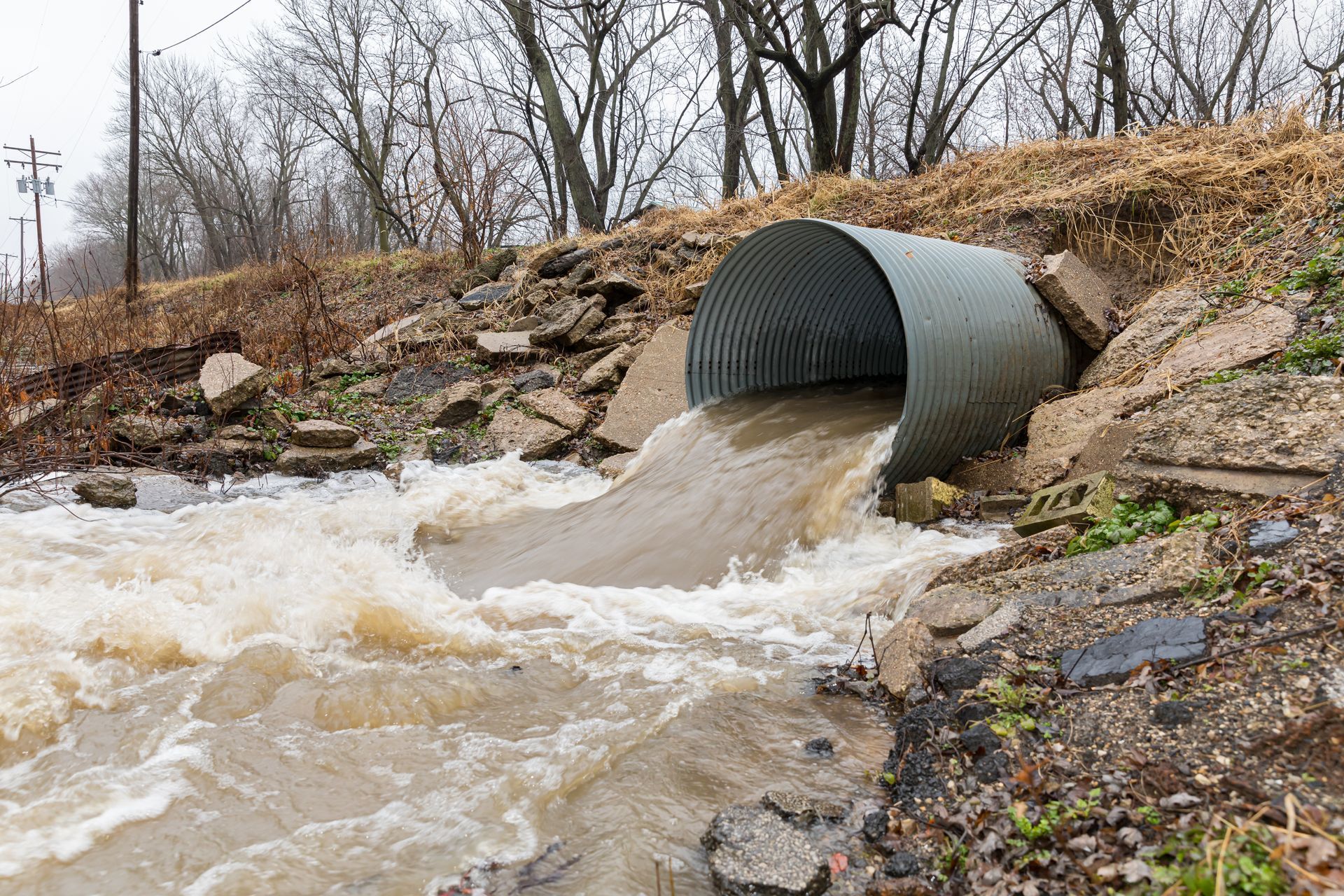
Water Passage Beneath Driveway Access Points
Culvert Installation in Osceola for properties needing water flow beneath driveways or access routes
Water naturally moves across properties following low areas, swales, and drainage paths that often cross where driveways or access roads need to be built. Installing a culvert allows that water to continue flowing beneath the roadway without pooling, washing out the surface, or blocking access. Bradway Land Management places culverts at locations where runoff, seasonal streams, or drainage ditches intersect with planned or existing access routes, creating a functional crossing that maintains both vehicle passage and water movement.
The installation involves excavating a trench across the driveway path, placing the culvert pipe at the correct depth and angle to match the natural water flow, and backfilling around the pipe with compacted material that supports the weight of vehicles. The surrounding grade is shaped to direct water into the culvert inlet and allow it to exit downstream without erosion or backup.
Request a site visit to identify where water crosses your planned driveway and determine the appropriate culvert size and placement.
How Culvert Work Supports Access and Drainage
Culvert size depends on the volume of water expected to pass through during rain events, with diameter and length chosen based on the width of the driveway and the slope of the surrounding terrain. The pipe is positioned so water enters smoothly, flows through without obstruction, and exits at a grade that prevents scouring or sediment buildup. Proper backfill and compaction around the culvert prevent settling that could cause the driveway surface to sink or crack over time.
Once the culvert is installed and the driveway surface is graded, water will flow beneath the access route during rain rather than pooling on top or washing across the roadway. The driveway remains passable in wet conditions, and the natural drainage pattern continues downstream without interruption or erosion at the crossing point.
Culvert installation does not include driveway surfacing with gravel or asphalt, though the surrounding grade is prepared to support those materials if added later. The focus is on establishing a stable crossing that handles water flow and vehicle weight without compromising either function.
Answers to Frequent Service Questions
Property owners in Osceola and neighboring communities often ask practical questions about culvert work before installing a new driveway or improving an existing access route.
What determines the size of the culvert pipe?
The pipe diameter is selected based on the amount of water flowing through the area during heavy rain, the slope of the land, and the width of the driveway that needs to pass over it.
How deep is the culvert installed?
Depth depends on the natural grade of the drainage path and the height of the planned driveway surface, with the pipe positioned to maintain water flow while providing adequate cover for vehicle traffic above.
What happens to water during and immediately after installation?
Water is temporarily redirected or allowed to flow around the work area during excavation, then resumes its normal path through the culvert once the pipe is placed and backfill is compacted.
Can a culvert be installed where water only flows occasionally?
Yes, seasonal or intermittent water flow still requires a culvert if the drainage path crosses the driveway, since even occasional runoff can wash out an access route without proper passage beneath it.
What material is used for backfill around the culvert?
Compacted gravel or soil is placed around and over the pipe to distribute vehicle weight, prevent shifting, and maintain the driveway's structural integrity across the culvert location.
Bradway Land Management assesses water flow patterns and driveway locations to determine the culvert specifications needed for your property. Call (715) 417-4816 to schedule an evaluation and discuss installation timing for your access project.