Property Access Starts with Clear Ground
Brush Removal in Osceola for properties where overgrown vegetation blocks maintenance and usable space
Bradway Land Management handles brush removal across wooded lots, field edges, trails, and open areas where thick growth limits what you can do with your property. When saplings, wild shrubs, and dense undergrowth take over, you lose visibility along property lines, struggle to maintain fencing or structures, and find that whole sections of land become unusable. This service targets problem vegetation that restricts access without moving into full land clearing or forestry mulching, keeping the focus on reclaiming specific areas where brush has become a barrier.
Brush removal addresses the tangle of woody stems, vines, and volunteer growth that standard mowing equipment cannot handle. The work involves cutting vegetation at ground level, removing root masses where regrowth would be immediate, and clearing debris so the area becomes navigable again. Properties with creek edges, old fence lines, or abandoned trails typically accumulate years of layered growth that chokes out grass and prevents routine maintenance from ever catching up.
Schedule a property evaluation to identify which sections need targeted clearing and how to approach regrowth control.
What Clearing Problem Vegetation Actually Accomplishes
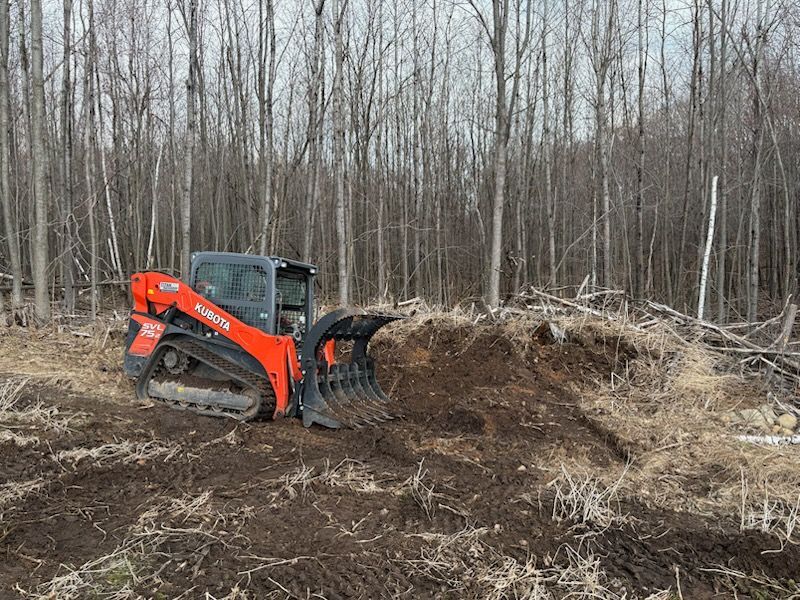
Once brush is removed, you see the ground again—fence posts become accessible, property boundaries return to view, and sections that were impassable can be walked or mowed with standard equipment. The difference shows up in how far you can see across your land and whether you can drive a vehicle, string wire, or establish a walking path where dense growth previously made those tasks impossible.
After the vegetation is cleared, the soil surface is exposed and stabilized enough for you to decide what happens next: reseeding, maintaining it as open space, or allowing controlled regrowth of desirable plants. Bradway Land Management removes the cut material from the site or processes it on-site depending on volume and your preference, leaving a clean surface rather than piles of tangled stems that continue to block use.
This service works for areas where the problem is density and access, not tree removal or stump grinding. If your property includes heavy timber or requires mulching equipment to process standing wood, those needs fall under different clearing methods. Brush removal focuses on the undergrowth and smaller woody plants that create barriers without requiring large machinery or forestry-grade processing.
What Landowners Ask About Vegetation Clearing
Questions about removing problem growth come up frequently as property owners evaluate what their land actually needs and how clearing will change access and maintenance going forward.
What size vegetation counts as brush versus something that requires heavier equipment?
Brush removal handles woody stems and saplings typically under three inches in diameter—anything you could cut with hand tools but would take weeks to clear manually. Larger growth or dense stands of small trees move into forestry mulching or land clearing territory where the equipment and approach differ significantly.
How does clearing around Osceola properties address regrowth from native species?
Wisconsin's climate supports aggressive regrowth from buckthorn, honeysuckle, and sumac, all of which resprout quickly if roots remain active. Effective clearing removes enough of the root structure to slow regrowth and give you a window to establish grass or manage the area before the next wave of seedlings arrives.
What happens to the cleared material once vegetation is cut?
Debris is either hauled away or chipped and spread on-site depending on volume and how you plan to use the cleared area. Properties that will be mowed benefit from complete removal, while areas managed as natural buffers can handle processed material left in place as mulch.
When should brush removal happen to reduce how fast vegetation returns?
Late fall through early spring offers the best window because plants are dormant and regrowth is slowest, giving you time to seed, mow, or treat the area before the growing season begins. Clearing during active growth means dealing with resprouts almost immediately.
Does removing brush change drainage or erosion patterns on sloped ground?
Clearing vegetation exposes soil that was previously held by root systems, so grading or seeding often follows on slopes to prevent washout. If drainage problems exist under the brush, those need separate attention through grading or water management rather than assuming vegetation removal solves runoff issues.
Bradway Land Management evaluates each property to determine where brush removal opens up usable space and where additional services address underlying drainage or access concerns. Request an on-site assessment to review which areas need clearing and what condition the ground will be in once vegetation is removed.